Monday, October 20, 2014

Living the Dream

In The Secret Life of Walter Mitty, everything was about life. The main themes were living life to its fullest and getting out of the mundane world. The film also showed how there are endless opportunities for people to break out of their shells and get out into the world and live their daydreams. Walter Mitty finally got to live the life he was always dreaming about, and with excellent mise en scene the movie took the audience along for the journey. Towards the beginning of the film, there were a lot of linear, angular shots, but as the movie progressed there were more open, wide shots that brought the audience to Iceland and Afghanistan. Using these tricks and more, the movie felt like an adventure for everyone who was watching, and left an inspiring message to live the dream. Having a classical film approach, the movie uses more and more aleatory technique as it progresses, making it feel all the more real. Using mise en scene, The Secret Life of Walter Mitty takes the audience from feeling trapped in Walter's small world to freeing themselves along with him.

Towards the beginning of the movie, everything is very letterboxed and tightly framed. There is a working order to things, and there is always a plan. Pretty much every shot looks exactly the same.  When Walter is first in his workplace, his sister shows up and hands him a bright orange cake. That cake is the only thing that has color in Walter's workplace, and he's supposed to be working for LIFE Magazine. In theory, everything would be as lively as the little orange cake, but everything is drab and shades of blue or gray. Walter's birthday brings a dominant contrast into the frame, and it becomes clear how boring everything else is. Even the past covers of LIFE, which should represent life, are boring and dull, part of the background of Walter's world, a subsidiary contrast. There is one shot where he is looking around the corner at Cheryl, the object of his affection. In that shot, there is a wall so close to his face. It feels awkward to be looking around that wall. The aspect ratio is such that the wall is out of focus, but it still makes the scene feel closed form. The proxemic pattern is also social, and doesn't lend a lot of personality to the encounter. This is also an example of an anticipatory shot, which again removes the scene from being personal and renders it almost idle, a pastime that has become a habit, though not necessarily a good one. Finally, as Walter embraces adventure in a "screw
you" gesture towards his transition manager, he runs past several of the past covers from LIFE. They sort of start to blur together and at the end, Walter's face is on the last cover. This shows how he is finally living the life he's been printing pictures about for the past fifteen years. It shows how he is literally going to fly into the unknown just for a cover photo. Since the photo is of himself, he is really going out there to save himself from getting lost in the gray world he's found himself in.


Now that Walter has left his boring old world, the shots open up. Everything starts to be more loosely framed, long shots that take in the sweeping, colorful landscape. There starts to be more density of texture. The shots have more depth and more weight. Things seem to be more spontaneous as well. Walter winds up with a red sweater. This seems unimportant, but it allows him to be the dominant contrast in the palette of greens and browns, so for once in his life, he stands out. He also gets to use some of his skills that have lain dormant for some time, such as his skateboarding ability. Being out of his cubicle and therefore outside his box offers him greater freedom and shows him that everything he can do is important. He's not just the negative assets manager that nobody appreciates because they don't see what he does. Now, he doesn't need a specific skill set. Now he knows that he can be important for everything that he can do. Of course, there are some things he can't do. Although Walter is very neat
and balances his checkbook frequently, before his adventure he never would have had to climb a mountain. But he will do anything to find this mysterious photographer. There is an interesting bit of parallelism from a fantasy Walter had at the beginning of the film. He imagines himself as a wild, foreign mountain man, come to sweep Cheryl off her feet. But at this point in the movie he is on the mountain for a whole host of reasons other than Cheryl. This kind of parallelism is fascinating because before, it was a workplace daydream, but now it's reality. Usually it happens the other way around, but here, it makes it clear that Walter is stepping into his daydreams and living life for himself and loving it. What will happen when he reaches the end of his quest, though? He finds the old photographer. He has to go back to his boring
old world. So now what? Well, it's not like he just ignores everything that has happened to him.
Despite being back in a symmetrical, boxed-in environment, he takes those experiences and keeps them, because he knows what it means to really live life. Walter knows he can do anything he wants to now. And who knows? Anything can happen. He knows he can do all these things now, so there's nothing that's stopping him from going out and doing them besides himself.

In the end, The Secret Life of Walter Mitty was a truly inspiring movie that helps the audience believe that anything is possible.  With amazing mise en scene to further the story and make it feel that much more relatable and real, the movie makes its point in a beautiful way that leads all the senses to believe the many life truths it presents. Walter Mitty makes a beautiful journey from a boring, average Joe that is relatable to many audience members to a more adventurous, outgoing person who can live their fantasies. Using mise en scene to bring the audience along for the journey, the film takes someone ordinary, someone who very well could have just walked into the theatre, and shows how amazing life could be. By starting with everything very planned and anticipatory, but moving into a more spontaneous and aleatory style, The Secret Life of Walter Mitty brings everyone on an adventure that helps people to realize their full potential. The framing and shots in the movie are what made the journey so much more believable, and everyone watching the movie makes the journey right along with Walter.

Monday, October 13, 2014

Mystic River


In Mystic River, the idea of a cross was brought up a lot. Jimmy, of the three main characters, had the most crosses with him in the shots. He always had another obstacle to overcome, something to crucify him. At the end of the film, he is shown with a Celtic cross on his back. The way he is framed suggests that he is alone and struggling a lot with what he's done. He has just killed his friend. By keeping the shot asymmetrical and having him be in darkness, this shot shows how much Jimmy is upset about what he has done and how he is suffering. In the shadows, with a cross on his back. He has a cross to bear, and that is the murder of someone who, as it turned out, was innocent. Before that, there is a shot of him walking down the street, arms outstretched. Jimmy is once again being crucified in this imagery. This shot is different, however, because it is a symmetrical design. This reinforces the feeling of parallelism. On this same street, Dave dies the first time when the molesters take him away. On this street, Jimmy is tortured with the guilt of killing Dave a second time. Jimmy is dying himself in a way, because he has killed a man for something he didn't really do. In the Crucifixion in the Bible, Jesus died to bring peace and forgiveness to everyone. Jimmy is being crucified because he brought Dave the peace that only death could bring. In this film, everybody had their crosses to bear. Jimmy's was one of the heaviest.

Dave also had a lot of pain in his life. In his childhood, he was kidnapped by a pair of men pretending to be police officers and molested. The shot of one of them leaning around the seat and putting his hand up, revealing a ring with a cross on it, has a lot of significance. Not only does it represents what Dave is about to go through, something that will scar him for his entire life, but it also the perversion of something pure, like the church, which also signifies what he is going to go through. The shot is sort of a dramatic contrast between the ring, which should mean something good, and the fake officer, who is anything but. Towards the end of the movie, the two Savage brothers take Dave to the bar in much the same way he was taken from his friends when he was a kid. This parallel editing shows how something bad is going to happen to Dave, because when he was taken like that the first time, it did not go very well for him. Once they are in the bar, Dave seems boxed in, surrounded by people who are supposed to be his friends but who can't quite reach him. The shot has a lot of density and texture, making the viewer feel as heavy and intoxicated as Dave. Dave's discomfort at the bar directly translates to what happens next, which is him being betrayed by a friend and killed. Like in the car at the beginning of the movie, he dies, only instead of just his childhood dying he loses everything. Dave lost a lot in this movie, and he was on a cross from when he was just a child, suffering through it all.

Monday, October 6, 2014

The Royal Tenenbaums

The Royal Tenenbaums showed just how dysfunctional a family could get. For example, the father, Royal Tenenbaum himself, always introduced his daughter Margot as his "adopted daughter". This isolated her completely from the rest of the family. One trick the director used to emphasize this was to always put Margot in the back corner of a shot, except when she was with Richie. Richie was sort of like her excuse to be a part of the family. He helped her through a lot. But any time Margot was without him, she was tucked away in the corner. This showed how separate she was from the rest of them. She had her own agenda, she was doing her own thing regardless of what the family wanted her to do. When the whole family visited the grandmother's grave, Royal says Margot never got invited because it wasn't her real grandmother. At the graveyard, she distances herself from everybody and doesn't even appear in the same shots as anyone except for Chas's children. She is kept very separate.


Eli Cash played an interesting part in the movie. He wasn't really a Tenenbaum, but he desperately wanted to be. This played out with him having an affair with Margot and sending Etheline his newspaper clippings. He is very conflicted throughout the film, and this is conveyed by always having him surrounded by odd things. There is always something behind him, there is always something going on in the background, and it feels very chaotic. He also always has an air that he doesn't quite belong. This is shown with his cowboy hat never leaving his person, even when he is hiding in Margot's closet. Eli always has to be wearing his cowboy costume, even though he doesn't quite fit in with it on, because that is who he would like to be. This represents how he wants to become a Tenenbaum but just never quite fits in with the rest of them.


Monday, September 29, 2014

Ethics

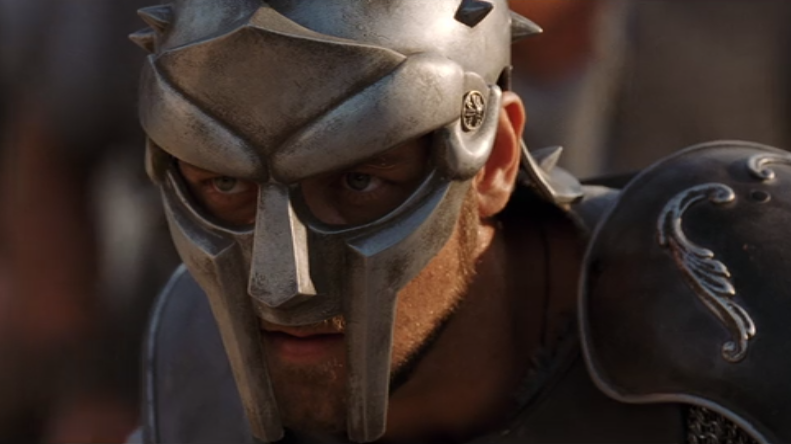
Ethics can be changed by many influential factors. How moral someone is, whether or not they're in love, and how honorable they are all play a part in shaping someone's ethics. In The Usual Suspects, Eternal Sunshine of the Spotless Mind, and Gladiator, there are three very different ethical structures. In The Usual Suspects, almost everyone is a criminal. They don't have much in the way of morality, so their idea of ethics is far different from normal people's. Eternal Sunshine of the Spotless Mind has several different couples who are in love. Love changes the way everybody looks at things. Whether the person in love is on the receiving end or whether there are actions governed by jealousy, love twists the way people look at things, for better or for worse. Honor is something that is harder to change, like in Gladiator. Maximus is honorable to the end, following the conventions and going through proper channels to get what he wants, no matter how hard it might be to get there. Commodus, on the other hand, has no honor. He smothers his own father and lies his way to becoming emperor. His idea of ethics revolves solely around himself. In all three movies, it is shown that ethics can be skewed from the typical sense of right and wrong by morality, love, or honor.


Criminals have their own sense of justice and mercy. This carries over to their morals. Being fairly immoral to begin with, the people in The Usual Suspects don't exactly have much of a sense of ethics. But they do have a sort of code. Their ideas of right and wrong don't match the policemen's ideas, nor do they match what an average person might consider ethics to be. In the scene where Fenster turns up dead, he was killed because Kobayashi didn't want anybody running away. This shows how immoral but still ethical the criminals are. Kobayashi said what he was going to do an he stuck to it, because that was the right thing to do for his employer. His idea of ethics differs from others because of his morals. The entire plan to get aboard the boat is a mess of terrible ethics. But since they had something they wanted to achieve, they threw their old morals out the window. In the beginning of the movie, Keaton had said he didn't want to kill anyone. By the end of the movie, Keaton was the first one on the boat, shooting people left and right to get to the dope he was looking for. As soon as something became more important than his policy of not killing anyone, his morals, and therefore his sense of right and wrong, had changed. What changed his mind was the idea that the woman he loved could have been killed by Kobayashi, so he cooperated with the new plans and the new morals.


When someone falls in love, their priorities can get a bit screwed up. In Eternal Sunshine of the Spotless Mind, Joel and Clementine shift their entire livelihoods to coexist. They are complete opposites. Anytime they sit next to each other, it shows how different they are. Joel is plain and gray, with a boring name and a boring life. Clementine is exciting and colorful and crazy. They defied the idea that people so different couldn't be together because they did fall in love and their worlds had to change a lot to include the other. Their ethics had to change. Something that Joel wouldn't do, like break into a house, he would do when he was with Clementine, because she made his sense of right and wrong change. What was right for one was what was right for the other, because they were in love and they wanted to be together, for each other, no matter what.  Love messed up their priorities, their ethics, their lives.  When someone's in love, their other half becomes the first thing they care about, and everything else can follow. They put the other person first regardless of the effect it will have on other people.


Love and honor are closely intertwined. Maximus was a soldier in Gladiator. He believed that war and dying in war was honorable. Then his family is killed and he is charged with treason for standing up for something he believes in. When Maximus's honor of being a soldier is taken away from him, his sense of right and wrong is drastically changed. He is forced into the gladiator arena, and there he can't not kill people if he wants to make it out and do what he wants. His love for Rome and his love for his family fuels his desire for revenge against Commodus. Commodus wants the opposite of what Maximus and the late emperor want. Maximus is only trying to do what he believes in, what he thinks is honorable given the situation. But his ethics change from the beginning of the movie to the end. At the beginning, he would only kill in war. By the end, he was still only willing to kill for his cause, but his cause was very different. His cause was the good of all of Rome no matter what, but he wound up being fueled by love with regards to the gladiator matches rather than honor and duty on the battlefield.


There are a lot of variables that can cause ethics to change. Some of them are morality, love, and honor. While The Usual Suspects, Eternal Sunshine of the Spotless Mind, and Gladiator are not movies that would normally be grouped together, they do exemplify how ethics can change from person to person, or even how one person's ethical code can change given the experiences they've had. Morality is something that varies depending on who the person is. Everyone's moral code, though fundamentally the same in some ways, is also very different in others. Love is something else that everyone has, although once again it is in many different forms. People fall in and out of love, but no matter what, love comes first. And honor is something that isn't on people's minds as much as it used to be. But honor is just another word for ethics. Everyone has something that they hold above all else, whether it is to honor something, because they believe it is right, or because they love it. But in the end, it's really all the same thing.

Monday, September 22, 2014

Eternal Sunshine of the Spotless Mind

Eternal Sunshine of the Spotless Mind is a very formalistic movie. The entire film, telling the story of Joel and Clementine's relationship backwards, was a choice to make a point. It gives the audience the chance to watch them go from a terrible couple to how they fell in love. This format makes the whole thing seem more hopeful. In the beginning, the audience should hate both of them. But by the end, the audience is invested, and this is because of the formalistic nature of the film. It utilizes odd camera angles and dreamlike sequences of the transitions in the memories to give the feeling that the entire movie is happening in your mind. One of the shots that was used several times in the movie was a high angle shot. On the ice, it was an oblique angle used to show how the fate of their relationship was to forever be on thin ice. In the train station, where people and bags are popping out of existence, it is to make the scene feel more frantic, as they are running away from the memory erasing.


There were also a lot of shots where the focus was on one or the other of Joel or Clementine. There was deep focus on one of them, and it gave the impression that to each other, they were the whole world. The use of color also conveyed this. Clementine is a bright pop of color in Joel's life. Her wildly colored hair and matching personality (she even says "I apply my personality in a paste") bring life to Joel's drab world. He only wears dark colors until he is with Clementine, and then his personality flourishes to catch up to hers. The lighting also reveals a lot about their relationship. At the beginning of the movie (the end of their relationship) all of the scenes are dark, showing how unhappy they are. However, by the time it progresses to the beginning of their relationship and the end of the movie, things get lighter and colors get brighter. This shows the hope in their new relationship and gives the film an overall hopeful tone. Despite the fact that these two people erased each others, you are still reminded of how they fell in love. Since the movie ends with a reunion, it feels like there is still hope somehow.


Monday, September 15, 2014

The Usual Suspects

One of the main themes throughout The Usual Suspects was smoking. This wasn't just because it took place before people were aware that smoking will kill you and smoking was cool. From an artistic standpoint, it has a metaphorical significance in the realistic movie. The cigarette smoke represents the smoke-and-mirrors deceptive nature of the entire movie. Everything is all about making other people do what you want to get something you need. And, of course, the entire film leading up to make you think you're so clever and you've figured out that Keaton is Keyser Soze, when it was diminutive Verbal all along. All of this was represented with the cigarettes present throughout the movie.


The biggest symbol and theme throughout the film was the devil. Verbal says (of Keyser Soze) "The greatest trick the devil ever pulled was convincing the world he didn't exist." The devil is represented a number of ways. In the scene when all of the criminals are first picked up on the car charge that brings them into the lineup in the first place, there is an element of red in all of the shots until you get to Keaton. Keaton is wearing beige, surrounded by neutral tones, and shown from a low-angle shot, making it clear that he will be the leader. Keyser Soze is painted the entire time as the devil by Verbal. Always in control, always getting exactly what he wants. He says, "How can you shoot the devil in the back? What if you miss?" This quote shows how people think of Keyser Soze, how he's the devil and you need to be absolutely sure that you're going to kill him before you do. What's most interesting about the quote is how it's "shoot the devil in the back". Almost like it would be as much of a regret to kill such a legend as a good thing for the world. Or that by killing someone that everybody is afraid of is somehow a betrayal of him. Knowing that Verbal is Keyser Soze helps that make slightly more sense, but it is an interesting commentary on the devil nonetheless.


Monday, September 8, 2014

What's Eating Gilbert Grape

In the movie What's Eating Gilbert Grape, the director used a variety of shots to convey meaning. One of the things the director did was always surround Gilbert with lots of stuff. Just tons of stuff would be in the frame and in the way behind him, or he'd be boxed in by the walls or the aisles of the store. But whenever he was with Becky, things would be more open and more free. This showed how he felt in the small town. Gilbert felt trapped and bored by everything around him. But as soon as Becky came into his life, things opened up. She was something new to the town, and she was great. Becky helped Gilbert out of his own little world, out of only thinking about the people around him, because even though it was destroying him to be so bored he wouldn't stop.


One of the best scenes of the movie was when Bonnie Grape got up and left the house to pick up Arnie from the police station. On the way there, the car is tilted. On the way there, it's funny. Haha, she's so fat the car is tilting to one side. But then in the police station, people are staring. People are shocked that she's up and about. And when the car is still listing to the side on the way back, it's just sad, and you feel bad for laughing. This is an impressive piece of diegesis, because it is the same image. It's amazing how one poignant scene can change your point of view on how you see something.